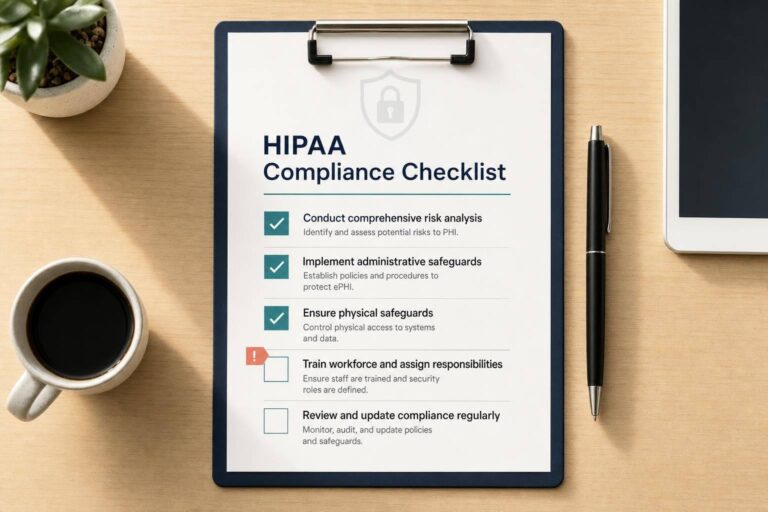
Review HIPAA Safeguards in One Place
A HIPAA compliance checklist tool can make internal reviews much easier when your team needs a clear way to assess core safeguards without turning the process into a legal exercise. Instead of relying on scattered documents or memory, you can walk through administrative, physical, and technical safeguards in a structured format and mark what is complete, still underway, or not yet started.
Built for Practical Internal Review
This checklist is useful for healthcare providers, health plans, clearinghouses, business associates, and related teams that want a more organized self-assessment workflow. It helps surface common areas such as workforce training, risk analysis, audit logs, device controls, encryption, breach response planning, and documentation practices.
Clear Progress Tracking Without the Guesswork
A strong HIPAA compliance checklist should do more than list requirements. It should help users track category-level progress, calculate completion based only on applicable items, and create a focused action list for unresolved gaps. Optional notes also make it easier to preserve context as reviewers move through each section.
This web-based HIPAA compliance checklist tool is designed for informational use only. It supports planning and internal review, but it does not guarantee HIPAA compliance, provide certification, or replace legal or regulatory guidance.
FAQs
Is this tool a HIPAA certification or official compliance determination?
No. This checklist is an informational self-assessment tool only. It helps users review common administrative, physical, technical, and privacy-related safeguard items in a structured format, but it does not certify compliance, provide legal advice, or replace a formal review by qualified legal, compliance, or security professionals.
How is the completion percentage calculated?
The overall completion percentage is based on items marked Complete out of all applicable items. Anything marked Not Applicable is excluded from the calculation so the percentage reflects only the checklist items that matter to your organization. Items marked In Progress or Not Started are also collected into an action list so it’s easier to focus on open work.
Who should use a HIPAA compliance checklist like this?
This kind of checklist can be useful for healthcare providers, health plans, clearinghouses, business associates, and teams supporting HIPAA-related programs. It’s especially helpful for internal reviews, policy refreshes, and preparing for deeper compliance conversations. Many organizations use a structured checklist to organize notes, identify obvious gaps, and keep safeguard reviews consistent over time.