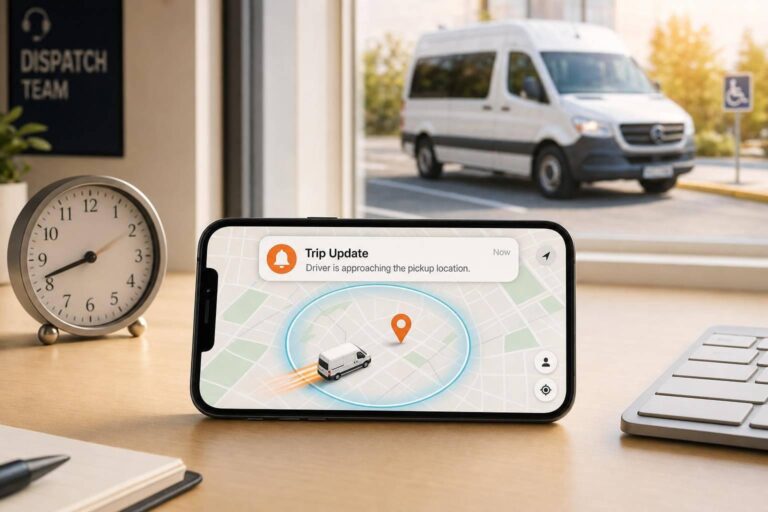
Missed trips often come down to one problem: dispatch finds out too late. I’d sum it up this way: real-time alerts give a small NEMT team a few extra minutes to fix delays, prevent rider no-shows, and reassign trips before revenue is lost.
Here’s the short version:
- Late pickups, driver no-shows, and rider no-shows are the main missed-trip problems
- Phone calls and paper schedules often surface issues after the pickup window is already in trouble
- GPS, geofences, driver app updates, rider reminders, and vehicle fault alerts help dispatch see issues as they happen
- Pre-trip rider reminders can cut wasted trips before a vehicle is sent
- Late-trip alerts give dispatch time to call the rider, update the facility, or move the trip
- Mechanical alerts can flag vehicle trouble before a route fully breaks down
- For a small team, the best starting point is usually 3 alert types:
- rider reminders
- late-arrival alerts
- geofence arrival/departure notices
A missed Medicaid or broker trip can mean $0 in payment while fuel, labor, and mileage costs still pile up. That’s why the main point is simple: the alert is not the win – the time to respond is.
If I were boiling the article down even more, I’d say this: use a small set of live alerts to catch schedule drift, communication gaps, and vehicle issues early, then keep those alerts inside one dispatch workflow so the team can act fast without extra noise.
How A 50 Vehicle NEMT Fleet Runs On One Screen
The Main Causes of Late Arrivals and No-Shows in NEMT
Most missed trips come back to three common problems: a schedule that starts slipping, poor communication, or a vehicle that goes down.
How Running Behind Schedule, Traffic, and Routing Errors Delay Trips
When a driver gets behind early in the day, that delay doesn’t stay put. It carries into every trip after that. Add traffic backups or a routing mistake, and things can go south fast.
Without live visibility, dispatch can’t see the problem soon enough to step in. That means no chance to reroute the driver or adjust the pickup window before the rider misses the appointment.
How Communication Gaps Disrupt Pickups
Breakdowns between dispatch and drivers are a major reason pickups get delayed or missed. If a rider confirmation never reaches the driver, or a facility update never gets back to dispatch, the trip moves forward with old information.
By the time someone notices the gap, the pickup window has often already closed. At that point, a small miss turns into a failed trip.
How Vehicle Breakdowns Escalate Delays
A vehicle breakdown in the middle of a route doesn’t just slow down one ride. It takes that vehicle out of the schedule altogether.
Dispatch then loses more time waiting to confirm the vehicle is out of service. And that shrinks the window to reassign the trip. What could’ve been a short delay can turn into a missed ride fast.
These are the exact failure points real-time alerts can surface early enough to fix.
How Real-Time Alerts Work in NEMT Dispatch
Those earlier failure points are a lot easier to handle when software turns them into live alerts. In NEMT, real-time alerts come from GPS, driver apps, geofences, trip-status updates, rider reminders, and telematics. Dispatch gets these signals nonstop as each trip moves forward, which helps problems show up before the pickup window closes.
The most useful alerts line up with the main causes of missed trips.
Driver status alerts track milestones like assigned, en route, started, and completed. That means dispatch can see trip progress without stopping to make a phone call.
Geofences send alerts when a vehicle enters or leaves a pickup or drop-off zone. This confirms arrivals and also flags cases where a driver still hasn’t reached a stop on time.
Late-trip warnings point out vehicles that are running behind schedule, giving dispatch a window to act before the trip is missed.
Rider reminder messages sent before pickup can cut down on no-shows by notifying passengers before the vehicle arrives [1].
Mechanical fault alerts from OBD or telematics can flag a problem before the vehicle breaks down [2].
How GPS, Geofences, and Mobile Apps Give Dispatch Live Trip Visibility
Driver mobile apps send trip-status updates to dispatch in real time. As the trip moves along, GPS feeds vehicle location and trip status into the dispatch dashboard, while geofences confirm when the vehicle arrives at or leaves a scheduled stop. Put together, these tools help dispatch spot delays, confirm arrivals, and step in before a missed trip happens.
That extra time matters. Dispatch can reroute a driver, call the rider, or swap the vehicle before the pickup window closes.
sbb-itb-af83355
How Real-Time Alerts Directly Reduce Missed Trips
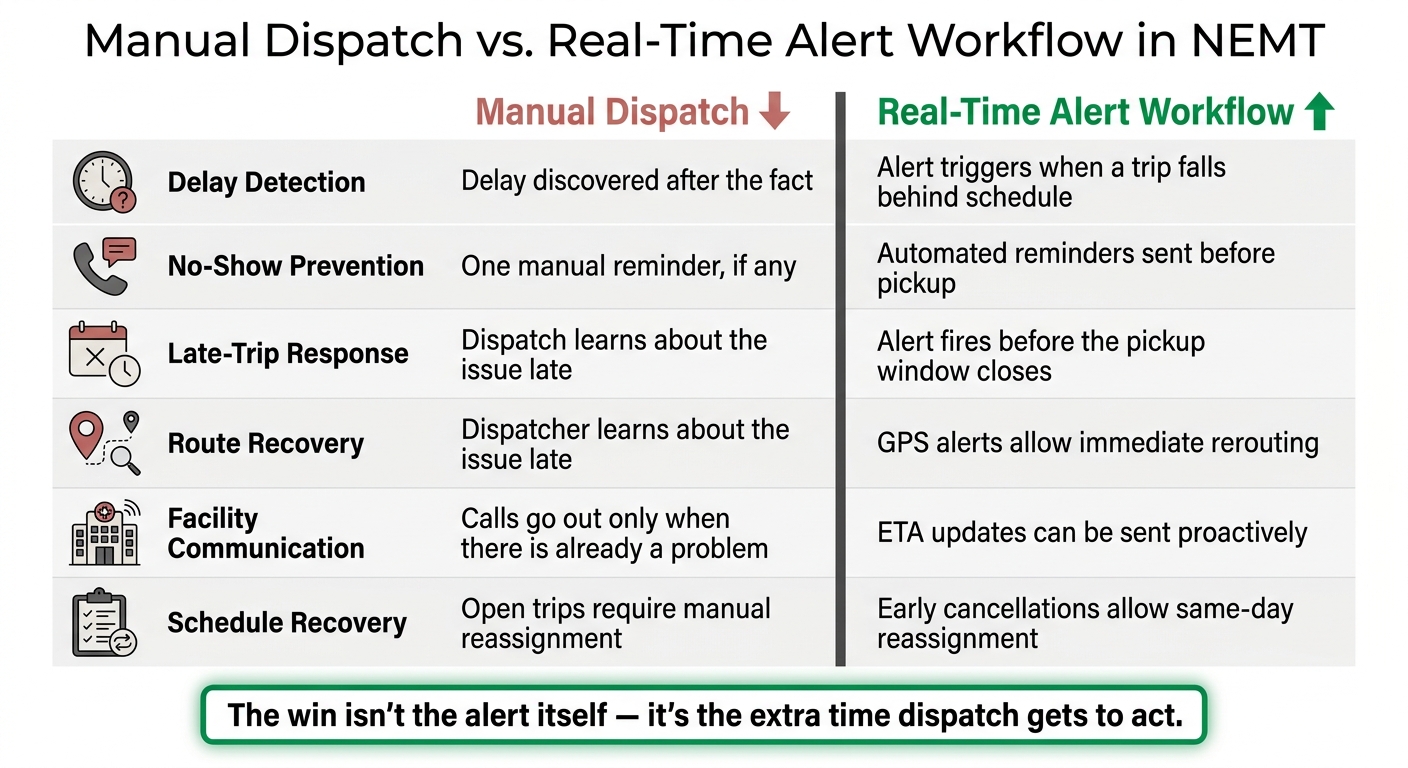
Manual Dispatch vs. Real-Time Alert Workflow in NEMT
These alerts fix the three breakdowns mentioned earlier: rider no-shows, late arrivals, and route drift. Each one targets a specific weak spot in the trip flow. And that’s the point. The win isn’t the alert itself. It’s the extra time dispatch gets to do something about the problem.
How Pre-Trip Reminders Cut Rider No-Shows Before the Vehicle Is Sent
Automated reminders give riders a chance to confirm, cancel, or reschedule before dispatch sends the vehicle out. That small step can save a lot of wasted time.
If a rider cancels early, dispatch can:
- reassign the trip slot
- adjust the route
- fill the opening with another run
Some platforms, including NEMT Cloud Dispatching, keep these alerts inside the dispatch workflow, so staff don’t have to jump into a separate tool to manage them.
How Late-Trip and Arrival Alerts Give Dispatch Time to Act
Once a delay starts, every minute counts. A late-trip alert only does its job if it shows up before the pickup window closes. If a driver starts falling behind, dispatch gets a small window to update the rider, contact the facility, or shift the schedule.
Without that alert, the delay may stay hidden until someone calls asking where the vehicle is. Sometimes just a few minutes of notice is enough to turn a missed trip into a late one instead. GPS alerts also flag route drift early, which gives dispatch time to step in before the delay snowballs.
Comparison Table: Manual Dispatch vs. Real-Time Alert Workflows
| Workflow Area | Manual Dispatch | Real-Time Alert Workflow |
|---|---|---|
| Delay detection | Delay discovered after the fact | Alert triggers when a trip falls behind schedule |
| No-show prevention | One manual reminder, if any | Automated reminders before pickup |
| Late-trip response | Dispatch learns about the issue late | Alert fires before the pickup window closes |
| Route recovery | Dispatcher learns about the issue late | GPS alerts allow immediate rerouting |
| Facility communication | Calls go out only when there is already a problem | ETA updates can be sent proactively |
| Schedule recovery | Open trips require manual reassignment | Early cancellations allow same-day reassignment |
For smaller fleets, the next issue is deciding which alerts help prevent missed trips and which ones just add noise.
How to Add Real-Time Alerts Without Overwhelming a Small Team
For small NEMT fleets, less is better.
If dispatch gets hit with too many alerts, people stop paying attention. And that defeats the whole point. What you want is a short list of alerts that helps the team spot trouble early and step in before the pickup window closes.
This isn’t about piling on more notifications. It’s about getting earlier warning on the few issues that lead to missed trips.
Start With a Small Set of Highest-Impact Alerts
A smart rollout starts with three alert types:
- Rider reminders
- Late-arrival alerts
- Geofence arrival and departure notices
That small set covers a lot of ground without turning the dispatch screen into noise. If a new alert doesn’t fix a clear missed-trip issue, don’t add it yet.
Once you’ve picked the core alerts, the next move is simple: make sure the software matches the way dispatch already gets work done.
How to Choose Software Based on How Dispatch Already Works
Pick software that fits your current dispatch workflow instead of forcing the team to change everything at once. Cloud-based NEMT software such as NEMT Cloud Dispatching keeps scheduling, dispatch, GPS tracking, and mobile updates in one place.
That matters because when the tools live in one system, dispatch can move from seeing a problem to dealing with it without jumping between screens or chasing updates.
Conclusion
Missed trips are recoverable delays when dispatch can spot problems early and act before the pickup window closes. Start simple, keep the workflow easy to follow, and add more only after the core alerts work well day after day.
FAQs
What alerts should a small NEMT team start with?
Start with automated appointment reminders sent 48 hours before, the day before, and on the day of the trip. That simple cadence can help cut down on no-shows without adding extra manual work for your team.
Then layer in real-time arrival updates. For example, send an alert when a driver is 15 minutes away. You can also use status-based alerts, such as trip completion confirmations or driver safety reminders, to help keep day-to-day operations smooth and consistent.
How quickly can dispatch act on a late-trip alert?
Dispatchers can act on a late-trip alert immediately because modern NEMT platforms show where each vehicle is in real time and what each driver is doing.
With live dispatch consoles, they can adjust schedules on the spot, reassign trips to nearby vehicles, and contact drivers directly to deal with delays and keep service reliable.
Can real-time alerts reduce rider no-shows?
Yes. Real-time alerts can cut rider no-shows in NEMT by sending automated reminders through SMS, email, or voice calls 48 hours before a trip, 24 hours before, or right before pickup.
That simple timing matters. A reminder sent at the right moment can keep a trip from slipping through the cracks.
These alerts also make it easier for passengers to confirm, cancel, or change trips fast. That gives dispatchers more room to reassign vehicles, fill open slots, and adjust routes without the usual last-minute scramble.
Industry data suggests automated tools, including RouteGenie and NEMT Cloud Dispatching, may reduce no-show rates by 25% to 50%.